












Who's hiring?
Our small teams are looking to add 14 team members.
Product Engineer
About the small teams












Join a startup within a startup
Starting a job at a company of 230+ people can be intimidating!
With our small teams structure, it's like working at a startup within a startup. This allows each team to operate as autonomously as possible.
Many of our team members are former founders. Here they can focus on building great products without the distraction of running payroll, fundraising, etc - while still enjoying huge upside potential.
Pineapple on pizza: a house divided
Everyone at PostHog has an opinion about whether pineapple belongs on pizza (no matter how wrong they may be.) Here's how it breaks down for each small team.
Small teams who...
CORRECTLY agree
pineapple belongs on pizza
- RevOps100%
- Finance100%
- Platform UX100%
- Conversations100%
- Graphics100%
- Ingestion80%
- Replay75%
- Video67%
- Editorial67%
- Growth67%
- ClickHouse60%
- APM60%
- Support54%


Small teams who...
are SPLIT
on whetherpineapple belongs on pizza
- Warehouse50%
- Website50%
- Data Tools50%
- Security50%


(You could break the tie!)
Small teams who...
shockingly DISAGREE
pineapple belongs on pizza
- Blitzscale44%
- People & Ops43%
- Billing40%
- Self-Driving38%
- Demand Gen33%
- AI Research33%
- Talent29%
- Workflows25%
- Experiments20%
- Onboarding20%
- Surfaces17%


Speaking of pizza...








Compensation & equity
We hire the best talent and pay accordingly. We want everyone to feel invested in the company's success, so we offer equity with very employee-friendly terms.
Transparent pay
Use our full salary calculator to see what you'll make here. You’ll know your approximate starting salary before you even apply.
Role
Location
(based on market rates)Level
Step
(Really) employee-friendly equity terms
- 10 years to exercise your options (if you leave)
Most companies give you 90 days. - Double-trigger acceleration
You receive all your options in the event you're let go due to the company being acquired. - Employee secondaries (when offered)
In 2024, we held our first secondary for early employees to sell some of their shares. We executed our first tender offer in 2025, and plan to do more.
Get paid to try working here
We do 2-3 short interviews, then pay you to do some real-life (or close to real-life) work.

POV: We're excited to meet you!
- 1
Application
Our talent team will review your applicationWe're looking to see how your skills and experience align with our needs.
- 2
Culture interview
30-min video callOur goal is to explore your motivations to join our team, learn why you’d be a great fit, and answer questions about us.
- 3
Technical interview
45 minutes, varies by roleYou'll meet the hiring team who will evaluate skills needed to be successful in your role. No live coding.
- 4
Culture & Motivation interview
20 minutes, varies by roleYou have reached the final boss. It's time to chat with one of our Blitzscale team members.
- 5
PostHog SuperDay
Paid day of workYou’ll meet a few more members of the team and work on an independent project. It's challenging, but most people say it's fun, and we'll pay you $1,000 for your efforts!
- 6
Offer
Pop the champagne (after you sign)If everyone is happy, we’ll make you an offer to join us - YAY!
This message brought to you by our co-founder

yo, i’m james, one of the two co-founders, and there are a lot of things i can’t offer you…
- we don’t offer career progression frameworks
- we don’t offer mentorship
- we don’t offer lots of meetings
- we don’t hold back if we think something is wrong
- i don’t offer many capital letters
if you join, my job is to provide an environment where we coach you to build the best products you can.
it looks like:
- high expectations - i expect you to decide what to ship, for you to ship fast and for you to then iterate with users. you don’t have to do this alone, there are lots of friendly, deeply skilled and helpful people here - you just need to make sure you go get help instead of assuming it will come to you
- coaching for your team in the early days of a new product
- growth reviews of your product when it is popular to scale it or split it into more products
- lots of deep work time
- we will raise feedback constructively and will encourage crazy ideas
- lots of weird inside jokes
i believe you focusing on shipping products and learning from this is how you progress your career. anything else is a means to this end.
if you are joining a role outside of engineering, the concepts are exactly the same. that’s why we’re well known for a very different approach to marketing, sales, ops, recruitment and design.
A really long quote
(It was so good we just couldn't cut it down.)
At PostHog I'm given the trust to work on things that I think matter for the business and our customers.
There are no politics, no micromanaging, and pretty extreme amounts of autonomy for every employee.
I've never worked at a company that can ship so well and so fast. The people here are of incredible caliber, and management just gets out of the way (while also being helpful) so everyone can just can do their job in the best way possible.
Basically everything you hate about your job is the exact opposite here at PostHog. It's the weirdest, coolest place I've ever worked.
Get to know us in our company handbook

Almost any question you'll have about working here is answered in our public handbook. But here are some highlights you might be interested to know:
- Our revenue is over $50 million a year
- We're default alive
- If you join us, you will be expected to take a stance on if pineapple belongs on pizza
Who we look for
Our IEP (ideal employee profile)
TL;DR: We don't hire middle management.
Fun fact: We have an internal Slack channel called #do-more-weird where we discuss crazy ideas that most companies save for April Fool's Day.
Weirdos
We look for adventurers. We're here to take a small company to IPO, and beyond. We will only get there if we think differently to everyone else. We're not a fit if you want a predictable career.
 Joe BlackJoe Black worked as a clown, a morgue cleaner, and a chainsaw salesman before joining the
Individual contributors
We think it's more important to hire exceptional people, then give them autonomy and plenty of context. We're not a fit if management responsibility is what motivates you.
 Thomas ObermüllerThomas Obermüller was CTO for his previous company of 120 people before joining PostHog as a software engineer on the
Low egos
Fast, scrappy people thrive here. We're informal, we use clear language and get a broad variety of work done fast. We're not a fit if you want process.
 Cameron DeLeoneCameron DeLeone worked for an $11 billion startup, then was Vice President of a poultry farm before joining PostHog as a CSM.
Unexpected benefits
Perks you'll only find here
Two meeting-free days per week
After extensive research, we've found the best way to ship fast is to have fewer meetings.
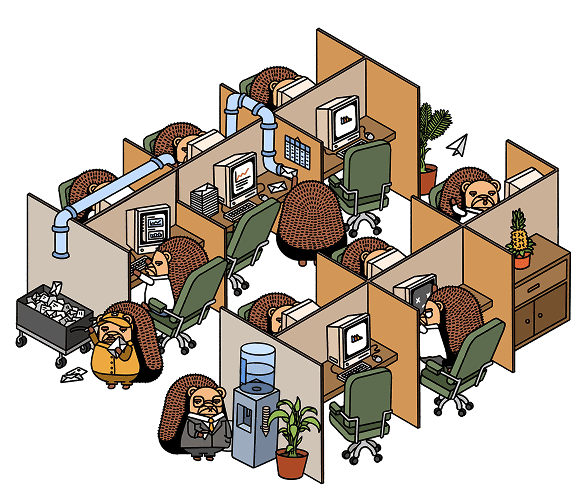
*Illustration is not indicative of a product engineer’s calendar at PostHog. We actually have relatively few meetings.


Company off-sites in exotic locations
Each year we organize fully paid company off-sites. The highlight is the hackathon where we team up to build things that aren't on our roadmap.
Off-site history:
Co-working or café credits on us
If heading out to a co-working space or getting some overpriced coffee from boogie coffee shops is how you do your best work, you get to charge it to your company card – everyone gets one.
Small team off-sites
You'll meet up with your small team somewhere fun periodically. Sometimes multiple small teams get together. We have a special budget for you to do this.
Recent small team off-sites have been in Sicily, Lisbon, Santiago, Cartagena, Sedona (Arizona), and Palm Springs (California).
Access to the Hedge Houses
We have a dedicated coworking space in San Francisco (SF) where you'll often find YC founders/members and some of our team working together. In London, we have a house where you can both work and relax, giving you options for collaborative or solo work in the city. There's also a house in Cambridge, UK available for employees to work from or stay at.
The boring benefits
Everybody offers healthcare, paid time off, and a laptop, so we organized our benefits by awesomeness. (Would we even be a tech startup without these?)
The one exception is equity (which you get), but is so unique that it deserves its own section below.

Unlimited paid time off (25 days minimum!)
You're required to take at least 25 days off per year. (If you don't, you will be locked out of Slack. Just kidding.) This doesn't come out of your sick leave or generous parental leave.

Training budget
Pick up new skills on the job with an annual training budget, plus free books and an Audible subscription.

401k matching or pension plan
Up to 4% matching for U.S. employees

Carbon offsetting
We contribute to Project Wren when we travel for work.

Home office
Get whatever you need to have an ergonomic setup at home so you can do the best work of your life.

Private health, dental, and vision insurance
US, Canada, & UK only
The most transparent company, ever
We're open-source and fully remote. In order to enable teams to make great decisions, we share as much information as we can. This includes:
Board meetings
We share slides from each board meeting internally. When everyone knows the direction we're headed and the obstacles we face, they can decide where their time is best spent.
Fundraising & finances
We keep our team informed about fundraising during the process and share a monthly report covering revenue, runway, and more. It's nice when you can see your hard work paying off (literally).
Constructive feedback
Transparency is a two-way street. We encourage individual feedback and run regular 360-degree group sessions during small team off-sites, so everyone can improve.
Latest monthly financial report

Live, Laugh, LEquip every developer to build successful products
Our jobs are zero fun. Here are some things that have made it a little less insufferable.

IsGoogleAnalyticsIllegal.com

That one time we found favor on Hacker News
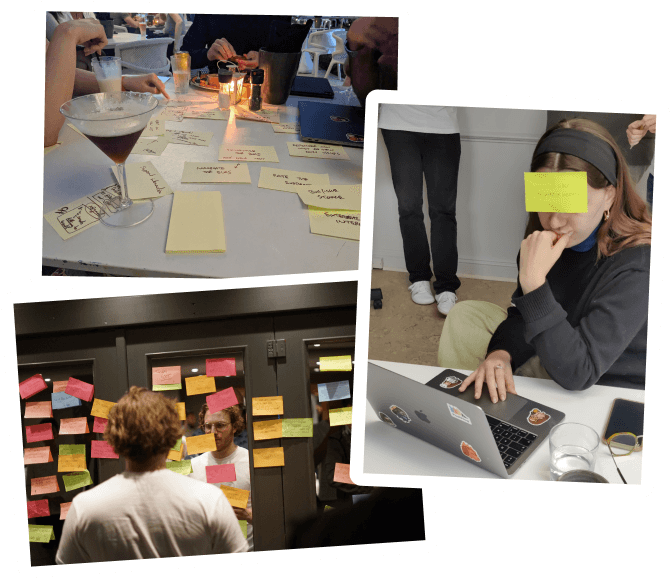
Taught people how to actually use post-its

Patrick Collison tweeted about us

6+ hour GitHub star live stream

35k+ GitHub stars
We are honored to be the most popular open source Product OS on GitHub. (Yes, we defined the category, but still...)
Won't you be our next star?

Enterprise modeTM on PostHog.com
Same website, just with bigger words. It makes us more approachable to the suits.
Find it under the Account menu (top right) on the homepage.

Built big things with small teams

Wrote the ClickHouse manual that other companies use

Crazy popular with the YC crowd

PostHog for enterprise

Hedgehog mode
CMD + K.
DPA generator, featuring a Taylor Swift edition

Human-readable privacy policy
Nice things we didn't coerce anyone into saying
Working at PostHog is a truly unique experience, which has probably set me up to hate any other job out there. I get to work on bizarre and challenging projects and no day is ever the same.

I hate how much I enjoy working at PostHog. It has ruined all other companies for me. Thanks a lot.

I wake up so excited to get to work that sometimes I pinch myself to make sure I'm not dreaming. The combination of high expectations, high trust, high autonomy, and high reward is so unique and drives me to improve every day.

PostHog enables me to do my best work. I am autonomous, empowered to do what I think is best, and truly on the maker schedule.

We take autonomy seriously. It's not the perfect fit for everyone, but for someone like me who has strong opinions and likes to make her own decisions, PostHog is an incredible place to be.