







The best ActiveCampaign alternatives & competitors, compared

Contents
ActiveCampaign is one of the most widely-used marketing automation tools on the market.
But ActiveCampaign isn't the only option. Whether you're looking for a more generous free tier, different pricing model, a greater focus on B2C, or a tool that combines automations with analytics, there are strong alternatives worth considering.
In this guide, we compare the best ActiveCampaign alternatives, including tools that go beyond just sending emails to building workflows across your entire business.
1. PostHog
- Founded: 2020
- Similar to: ActiveCampaign, Brevo
- Typical users: Engineers and product teams
- Typical customers: Mid-size B2Bs and startups
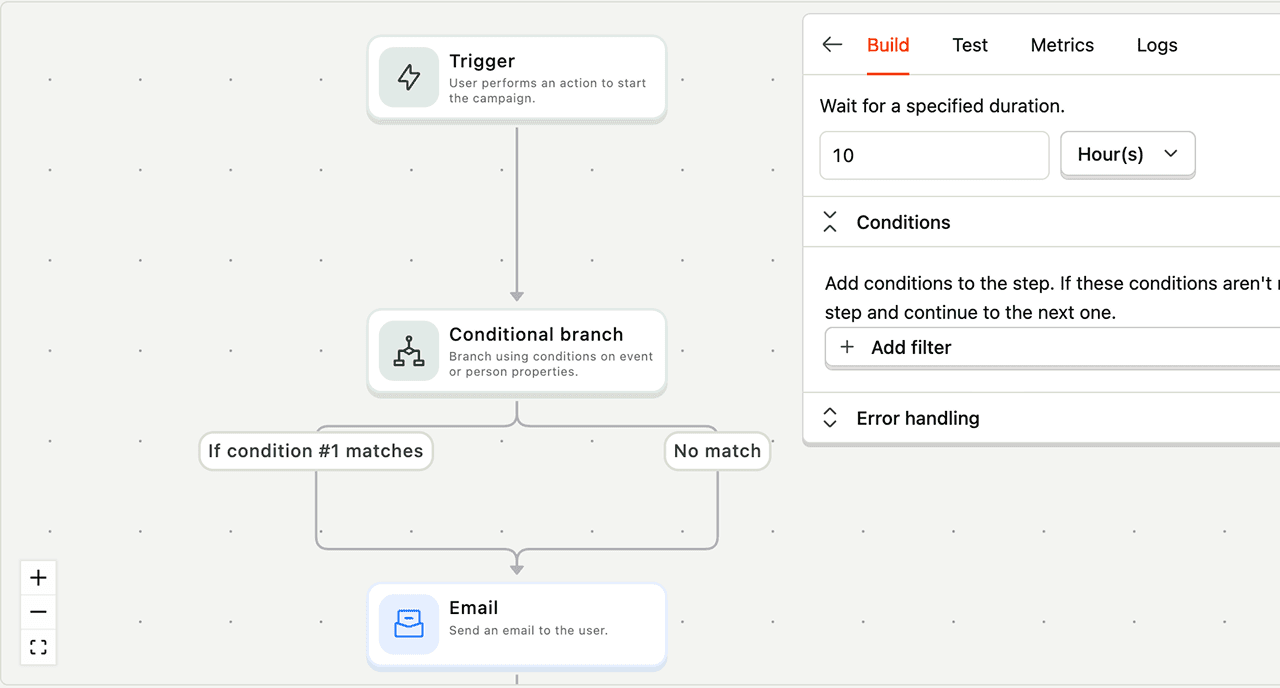
What is PostHog?
PostHog (that's us 👋) is an all-in-one platform combining workflows, product analytics, web analytics, session replays, user surveys, experiments, a CDP, data warehouse and more into one product.
This means it's not only an alternative to ActiveCampaign but also tools like Amplitude, Hotjar, and Survicate.
Key features
Workflows: Automate messaging and multi-step automations based on user behavior – trigger emails, SMS, Slack messages, or webhooks when users complete (or don't complete) key actions.
CDP: Ingest data from anywhere, transform it, enrich person profiles, and send it to other tools or platforms in real-time or via batch export.
Product analytics: Custom trends, funnels, user paths, retention analysis, and segment user cohorts. Also, direct SQL querying for power users.
Session replays: View exactly how users are using your site. Includes event timelines, console logs, network activity, performance monitoring, and 90-day data retention.
Surveys: Target surveys by event or user properties. Templates for net promoter score (NPS), product-market fit (PMF) surveys, and more.
A/B tests: Optimize your app and website with up to nine test variations and track impact on primary and secondary metrics. Automatically calculate test duration, sample size, and statistical significance.
How does PostHog compare to ActiveCampaign?
Main differences between PostHog and ActiveCampaign
- PostHog offers a generous free tier of 10k messages per channel per month while ActiveCampaign doesn't have a free tier.
- Although PostHog has an AI assistant for analysis, it can't create entire campaigns like ActiveCampaign's can.
- ActiveCampaign has more ecommerce integrations than PostHog does. PostHog has strong native product triggers though.
- PostHog is open source while ActiveCampaign is not (same is true for all the alternatives on this list).
Main similarities between PostHog and ActiveCampaign
- Both have visual, drag-and-drop workflow builders for emails and automations.
- Both offer email, SMS, and webhooks as channels.
- Both support cohort and segment-based targeting with customer profiles built-in.
Why do companies use PostHog?
According to reviews on G2, companies use PostHog because:
It replaces multiple tools: PostHog can replace ActiveCampaign (automations), Mixpanel (product analytics), and Fullstory (session replay). This simplifies workflows and ensures customer data is all in one place.
Pricing is transparent and scalable: Reviewers appreciate how PostHog's pricing scales as they grow. There's a generous free tier they can use forever. Companies eligible for PostHog for Startups also get $50k in additional free credits.
They need a complete picture of users: PostHog includes every tool necessary to understand users and improve products. This means creating funnels to track conversion, watching replays to see where users get stuck, building automations to send messages to users, gathering feedback with user surveys, and monitoring errors.
Bottom line
Thanks to its generous free tier and wide range of features, PostHog is a great alternative to ActiveCampaign, especially for product-led startups and scale-ups.


Install PostHog with one command
Paste this into your terminal and make AI do all the work.

2. Brevo
- Founded: 2012
- Similar to: ActiveCampaign, GetResponse
- Typical users: Lifecycle and email marketing, digital leads
- Typical customers: Medium-to-enterprise B2C businesses
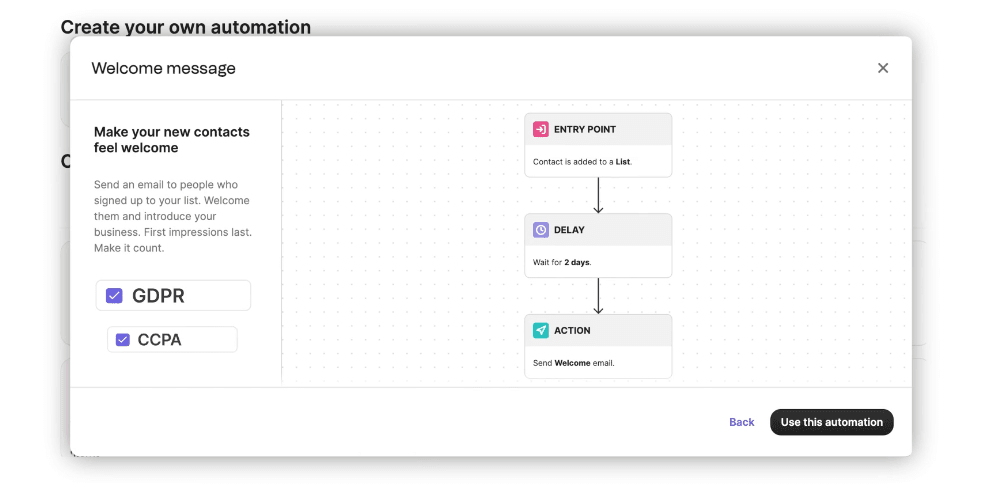
What is Brevo?
Brevo (formerly Sendinblue) is an all-in-one customer engagement platform. It combines marketing automation, CRM, email, SMS, and multi-channel tools into one platform.
Brevo is known for its ease-of-use, usage-based pricing, and AI features that help personalize campaigns, generate copy, and analyze performance data.
Key features
Marketing automations: Drag-and-drop automation and email builder with AI content generation.
Transactional messaging: Send personalized messages via email, SMS, and WhatsApp.
Sales management: Manage and track your pipeline, make and receive calls, and automate repetitive tasks.
Customer data platform: Capture, unify, and sync with customers across all channels.
How does Brevo compare to ActiveCampaign?
Main differences between Brevo and ActiveCampaign
- Brevo has a free tier of 300 emails/day while ActiveCampaign doesn't have a free tier.
- Although Brevo has an AI assistant, it can't create entire campaigns like ActiveCampaign's can.
- Brevo charges by email sent while ActiveCampaign charges by contact.
Main similarities between Brevo and ActiveCampaign
- Both Brevo and ActiveCampaign have a more general/B2B focus than other alternatives on this list.
- As proof of this, both have sales CRM features to manage and automate sales processes.
- Both offer a visual drag-and-drop workflow and email builder with AI assistance (although Brevo's AI assistant is not as advanced as ActiveCampaign's).
- Both support email, SMS, and WhatsApp as channels.
Why do companies use Brevo?
According to reviews on G2, companies choose Brevo for its:
Ease of use: Reviewers find that Brevo's email and workflow editor is easy to use and intuitive.
Affordability: Because they charge by emails sent, reviewers say that Brevo is cheaper than competitors. They like that they can bring all their contacts in Brevo for free without worrying about costs.
Segmentation: Reviewers appreciate how Brevo's segmentation capabilities enable them to reach the right audience and trigger campaigns based on user behavior.
Bottom line
Brevo and ActiveCampaign are very similar in terms of features, making Brevo one of its strongest alternatives.
3. Klaviyo
- Founded: 2012
- Similar to: ActiveCampaign, Omnisend
- Typical users: Lifecycle and email marketing, digital leads
- Typical customers: Large B2C and ecommerce businesses, marketing agencies
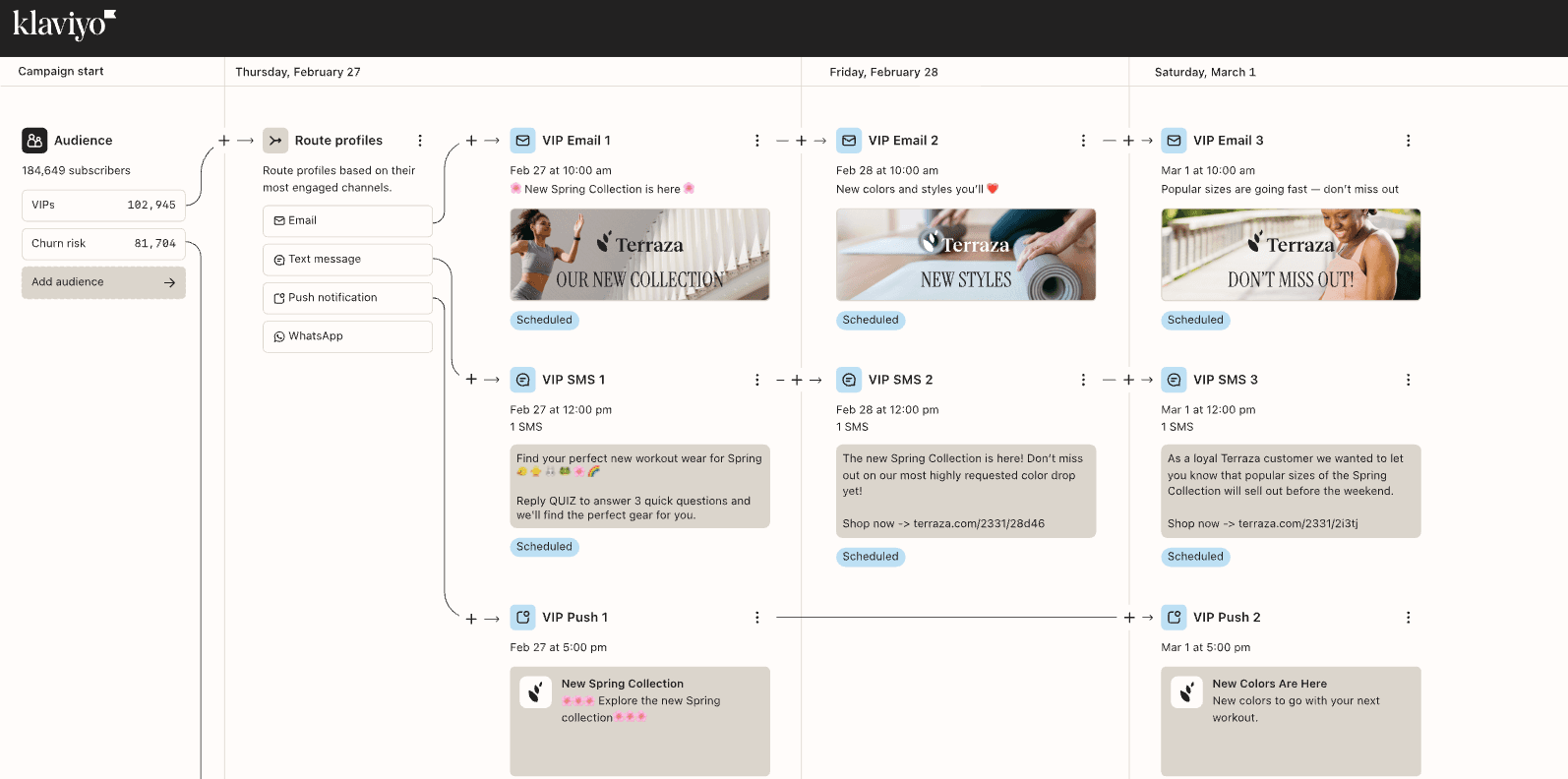
What is Klaviyo?
Klaviyo is a marketing automation platform and CRM for ecommerce and B2C businesses. It frames itself as a "B2C CRM" which means it has a wide range of features for capturing, analyzing, and engaging with customers.
It focuses heavily on being AI-first, with agents for both marketing and customer support.
Key features
B2C CRM: Capture customer data, analyze behavior, and engage with customers across channels.
Marketing AI agent: Create launch-ready campaigns from your website, generate on-brand content, and personalize messages with AI.
Omnichannel marketing: Send messages and coordinate campaigns via email, SMS, push, in-app, WhatsApp, and even social.
Customer agent: AI-powered customer support and help desk that provides answers, suggestions, and more.
How does Klaviyo compare to ActiveCampaign?
Main differences between Klaviyo and ActiveCampaign
- Although they're both mature marketing automation platforms, Klaviyo frames itself much more as a "B2C CRM."
- As part of this, Klaviyo has an entire customer support project with a help desk and customer agent. ActiveCampaign doesn't have this.
- Also related to this, Klaviyo focuses almost entirely on B2C businesses while ActiveCampaign is more general purpose.
- Klaviyo has a free plan with up to 250 profiles, 500 emails/month, and 150 mobile message credits. ActiveCampaign doesn't have a free tier.
Main similarities between Klaviyo and ActiveCampaign
- Both have CRM features for capturing, analyzing, and engaging with customers.
- Both are mature platforms that integrate with hundreds of other tools and platforms.
- Both support a wide range of channels like email, SMS, WhatsApp, and more.
- Both have a visual drag-and-drop workflow/automation builder with AI assistance.
Why do companies use Klaviyo?
According to reviews on G2, companies choose Klaviyo for its:
Ease of use: Reviewers praise how easy Klaviyo is to use thanks to its drag-and-drop workflow builder and templates.
Integrations: Reviewers say that Klaviyo integrates with basically everything but particularly like their Shopify integration.
Segmentation: Being able to group customers and send them the right message is another key feature reviewers appreciate. AI helps here too.
Bottom line
For B2C and ecommerce companies, especially larger ones, Klaviyo is a solid alternative to ActiveCampaign thanks to its wide range of channels and integrations along with its B2C CRM features.
4. GetResponse
- Founded: 1999
- Similar to: MailerLite, Drip
- Typical users: Entrepreneurs, creators, and ecommerce marketers
- Typical customers: Medium-large ecommerce companies, online creator businesses

What is GetResponse?
GetResponse is an email marketing and automation platform. It lets you build newsletters, automations, and landing pages that drive sales for online businesses.
On top of marketing automation tools, they offer AI product recommendations, funnels, webinars, and a website builder.
Key features
Automation builder: Drag-and-drop workflow builder with multiple channels, behavioral targeting, and filtering.
Newsletter: Create community, engage customers, and increase traffic with customizable email and an AI writing assistant.
Landing pages: Build fully customizable landing pages with drag-and-drop editor, templates, and an AI writing assistant.
Marketing automation: Send messages via email, SMS, web push,and popups.
How does GetResponse compare to ActiveCampaign?
Main differences between GetResponse and ActiveCampaign
- GetResponse doesn't include all the channels that ActiveCampaign does like WhatsApp and mobile push notifications.
- GetResponse includes many more features for online creator businesses like webinars and course creation.
- ActiveCampaign is more focused on general or B2B marketing while GetResponse is more focused on ecommerce and online creator businesses.
- Although GetResponse has an AI writing assistant, it's not as advanced as ActiveCampaign's AI assistant which can help build entire campaigns.
Main similarities between GetResponse and ActiveCampaign
- Both have a visual drag-and-drop workflow builder.
- Both offer email, SMS, and web push notifications along with a variety of custom triggers.
- Neither have a free tier.
- Neither are open source.
Why do companies use GetResponse?
According to reviews on G2, companies choose GetResponse for its:
All-in-one: Reviewers find that GetResponse provides all the marketing tools they need from landing pages to automations to email campaigns to webinars.
Templates: GetResponse provides a bunch of templates for emails, landing pages which lets reviewers get started quickly.
Intuitiveness: Reviewers appreciate that GetResponse is easy to use and the drag-and-drop editor helps flows get built quickly.
Bottom line
For medium-sized ecommerce and online businesses, GetResponse can be a great alternative to ActiveCampaign thanks to their range of monetization features and scalable pricing.
5. Omnisend
- Founded: 2014
- Similar to: Klaviyo, Drip
- Typical users: E-commerce business owners and marketing managers
- Typical customers: Smaller e-commerce businesses

What is Omnisend?
Omnisend is a marketing automation platform built for e-commerce (it's one of Shopify's top apps). It's designed around the online store lifecycle, focusing on cart abandonment, post-purchase sequences, and recommendations.
Key features
Visual automation builder: Drag-and-drop flowchart editor with a focus on creating on-brand campaigns.
Email and SMS campaigns: Trigger emails and SMS campaigns from online store events.
Segmentation: Segment by behavior, purchase history,engagement, and more.
Forms and pop-ups: Collect emails and phone numbers with pre-built, no-code forms.
AI assistant: Use AI to write copy and subject lines, create segments, personalize content, and more.
How does Omnisend compare to ActiveCampaign?
Main differences between Omnisend and ActiveCampaign
- Omnisend offers a free tier with 500 email sends per month along with automation and segmentation. ActiveCampaign doesn't offer a free tier.
- ActiveCampaign is more of a general purpose marketing automation platform while Omnisend focuses on e-commerce.
- To that end, ActiveCampaign offers more channels (push, WhatsApps) as well as more customizable triggers.
- ActiveCampaign has many sales-focused features that Omnisend doesn't.
Main similarities between Omnisend and ActiveCampaign
- Both have a visual drag-and-drop workflow builder with AI assistant built-in.
- Both offer email, SMS, and web push notifications along with a variety of custom triggers.
Why do companies use Omnisend?
According to reviews on G2, companies choose Omnisend for its:
Ease-of-use: Reviewers praise Omnisend's intuitive UX which helps them get started quickly.
Support: The Omnisend support team is mentioned as being highly responsive and helpful.
Branding: As e-commerce companies, branding is often critical and reviewers appreciate how Omnisend helps them stay on-brand.
Bottom line
For smaller e-commerce companies, Omnisend is a great alternative to ActiveCampaign thanks to the similarity of their core features and its free tier.
6. MailerLite
- Founded: 2010
- Similar to: Drip, GetResponse
- Typical users: Creators, founders
- Typical customers: Small-medium internet businesses and creators
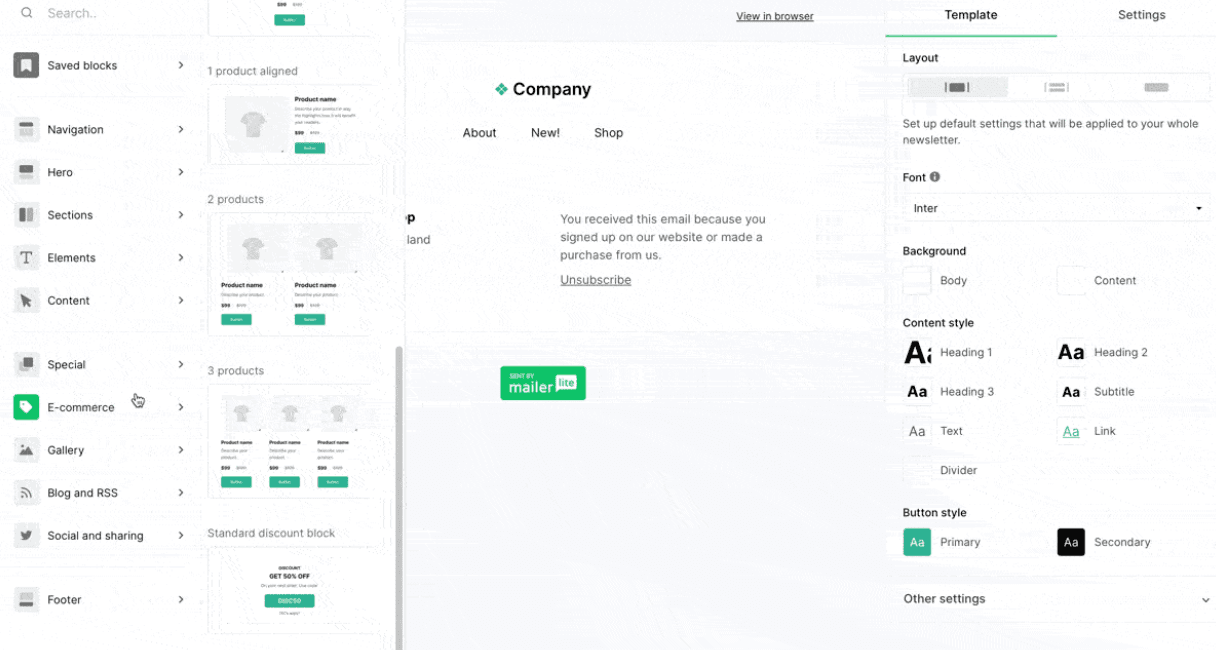
What is MailerLite?
MailerLite is an emailing and automation platform for small-medium businesses and creators. It's used to send emails, sell digital products, build landing pages, and create email campaigns.
Key features
Visual editor: Create emails, landing pages, forms, and even websites with templates and pre-built content blocks.
Automation builder: Create flows for cart abandonments, purchases, link clicks, subscribes, and more.
AI writing assistant: Use AI to write copy, subject lines, and personalize emails.
Websites: Build and host websites, landing pages, forms, and more.
How does MailerLite compare to ActiveCampaign?
Main differences between MailerLite and ActiveCampaign
- MailerLite focuses much more on website building than ActiveCampaign (though both offer landing pages).
- MailerLite has a free tier with 500 subscribers and 12,000 emails per month. ActiveCampaign doesn't have a free tier.
- MailerLite doesn't offer any of the sales or customer data focused features that ActiveCampaign does.
Main similarities between MailerLite and ActiveCampaign
- Both have visual, drag-and-drop editors for both emails and automations.
- Both offer email as a core channel with segment-based targeting and campaign tracking.
- Neither are open source.
Why do companies use MailerLite?
According to reviews on G2, companies choose MailerLite for its:
Email focus: For newsletters and email campaigns, reviewers appreciate how MailerLite is focused on email and doesn't try to do everything.
Affordability: Reviewers mention that MailerLite is much cheaper than alternatives (and even other marketing tools).
Support: This is a key selling point on MailerLite's website and reviews back it up, praising their speed and helpfulness.
Bottom line
MailerLite is a simpler, cheaper alternative to ActiveCampaign and a great option for creators and small-medium businesses needing just email as a channel.
7. Drip
- Founded: 2012
- Similar to: MailerLite, Omnisend
- Typical users: Email marketers
- Typical customers: Small-medium B2C businesses
What is Drip?
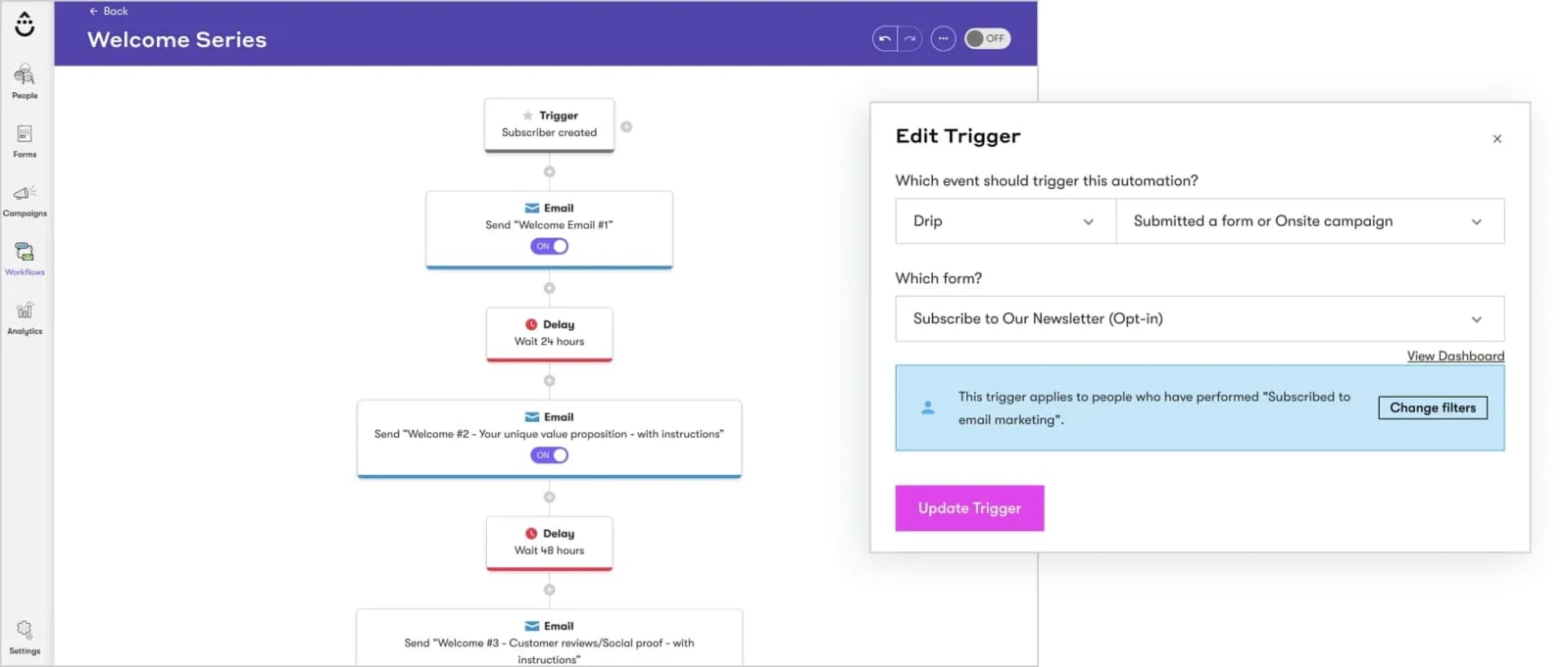
Drip is an email marketing platform built for B2C companies. It makes it easy to create performant, tailored email-based automations and campaigns.
They provide templates, behavior and lifecycle segmentation, forms, popups, and highly responsive customer support.
Key features
Visual email editor: Create tailor-made emails with a visual editor that supports personalization.
Automation builder: Drag-and-drop workflow editor for multi-channel, ecommerce, or behavioral-based automations.
Segmentation: Combine store, visitor, and marketing data to behavior and engagement-based segments.
Forms and popups: Create fully customizable and compliant forms and popups to collect emails and drive conversions.
How does Drip compare to ActiveCampaign?
Main differences between Drip and ActiveCampaign
- Drip focuses much more on email marketing. It doesn't offer push notifications or WhatsApp and even SMS needs to be requested from support.
- Drip is more of a B2C platform while ActiveCampaign has more B2B features like its sales CRM.
- ActiveCampaign offers an AI-assistant that can help build entire campaigns while Drip doesn't have AI.
Main similarities between Drip and ActiveCampaign
- Both have visual drag-and-drop workflow builders for emails and automations.
- Both have strong segmentation capabilities to ensure messages are sent to the right people at the right time.
- Neither offers a free tier.
Why do companies use Drip?
According to reviews on G2, companies choose Drip for its:
Customer service: Reviewers praise Drip's customer support as helpful and fast.
Ease of use: Reviewers find that Drip's automation, email, and segmentation builders are easy to use and intuitive.
Integrations: Drip has strong integrations with the ecommerce and CRM platforms that reviewers rely on.
Bottom line
Drip is a solid alternative to ActiveCampaign for small-medium B2C businesses focused on email as a channel.
Which ActiveCampaign alternative should you choose?
- Want an all-in-one platform that connects workflows to user sessions, analytics, feature flags, experiments, LLM observability, and more? Go with PostHog.
- Need general-purpose automation and CRM features? Try Brevo.
- B2C or ecommerce company needing a fully-featured CRM and omnichannel marketing? Klaviyo is your best bet.
- Online course creator or entrepreneur who needs marketing automation plus webinars, landing pages, and course creation? GetResponse gets it done.
- Need multi-channel marketing for ecommerce with a free tier? Omnisend has got you covered.
- Are you a creator or small business who only needs email? MailerLite is a great option.
- Smaller ecommerce company needing high-quality email automation? Test Drip.
Is PostHog right for you?
Here's the (short) sales pitch.
We're biased, obviously, but we think PostHog is the perfect ActiveCampaign replacement if:
- You value transparency. We're open source and open core.
- You want all the tools to help you build a better product (like workflows, product analytics, and session replays).
- You want to try before you buy. We're self-serve with a generous free tier.
It's completely free to get started – no credit card required. Our AI setup wizard handles configuration in minutes, or you can check out the workflow setup guide to do it yourself.
Install PostHog with one command
Paste this into your terminal and make AI do all the work.
Frequently asked questions
PostHog says it makes your product "self-driving" – what does that mean?
It means PostHog digs through your product data, finds what's worth fixing, and has agents do the work.
It starts with context. A full suite of developer tools – AI Observability, Product Analytics, Session Replay, Feature Flags, Experiments, Error Tracking, Logs, and more – captures everything happening in your product, and a Context Warehouse unifies it into one source agents can read across.
From there, Scouts read across all of it and sort what's worth knowing from what's just noise. What clears the bar becomes a report in your inbox: an agent picks it up, roots out the cause, and opens a PR. You review and merge.
You can steer it from Slack, the web app, the desktop app, or your own editor via the MCP or CLI.
What is email automation?
Email automation is the process of sending targeted emails to subscribers or customers based on predefined triggers, behaviors, conditions, and schedules. Examples include welcome sequences, abandoned cart reminders, new user onboarding, and re-engagement campaigns.
What is an example of a workflow automation tool?
A popular example of a workflow automation tool is Zapier, which lets you connect apps and automate actions using triggers. For example, you can use one to set up an automation to add new signups to your CRM and send them a welcome email.
Examples from this article include PostHog, Brevo, and Klaviyo.
What are webhooks?
Webhooks are a way to send data from one tool to another when a specific event happens without needing to sync data manually or rely on polling. They are basically push notifications for data.
Many workflow automation tools, like PostHog, make it easy to send data to other tools using webhooks.
What is ActiveCampaign used for?
ActiveCampaign is a customer experience automation platform with multi-channel marketing automation (email, SMS, WhatsApp), sales CRM, and AI assistant. Businesses use it to automate follow-up sequences, score and nurture leads through sales pipelines, and run targeted campaigns based on user behavior and engagement.
Why look for ActiveCampaign alternatives?
Common reasons include: contacts based pricing means you pay more as your list grows, no free tier, steep learning curve, weaker email delivery.
What's the best ActiveCampaign alternative overall?
PostHog is the best all-around ActiveCampaign alternative for most teams. It combines workflows with session replay, product analytics, CDP, A/B testing, and surveys, giving you a complete view of your customer journey.
Which ActiveCampaign alternatives are open source?
PostHog is fully open source under the MIT license with a public roadmap. None of the other alternatives on this list are open source.
Which ActiveCampaign alternative has the best free tier?
PostHog offers a generous free tier of 10k messages per channel per month plus analytics, replays, surveys, and more. MailerLite offers 500 subscribers and 12,000 emails per month. Brevo offers 300 emails per day.
Which ActiveCampaign alternative is best for ecommerce?
It depends your store size. Klaviyo is the best choice for larger ecommerce businesses, it's built as a B2C CRM with deep Shopify integration and omnichannel messaging. Omnisend is a better fit for smaller stores, with a free tier and a workflow builder designed around the online store lifecycle (cart abandonment, post-purchase sequences, etc.). Drip is another solid option for small-to-medium B2C businesses that want a focused, email-first experience.
Which ActiveCampaign alternative is best for B2B?
Brevo is the closest like-for-like B2B alternative to ActiveCampaign. It has a sales CRM, pipeline management, and multi-channel automation at a lower price point.
PostHog is the best choice if your B2B product is software: it connects workflows directly to product analytics, session replay, and A/B testing so you can automate based on what users actually do in your app, not just email engagement.

Subscribe to our newsletter
build mode
Read by 75,000+ founders and builders
We'll share your email with Substack
PostHog is the leading platform for building self-driving products. With a full suite of developer tools – AI observability, product analytics, session replay, feature flags, experiments, error tracking, logs, and more – PostHog captures all the context agents need to diagnose problems, uncover opportunities, and ship fixes. A data warehouse and CDP tie it all together, unifying that context into one source agents can read across. You can steer it all from Slack, the web app, the desktop (PostHog Desktop), or your own editor via the MCP.