







How to get hired to PostHog's marketing teams

Contents
Marketing roles at PostHog are competitive to a degree that surprises people. I posted on LinkedIn that we're hiring another Developer Marketer and had dozens of DMs within an hour, for a role that already had over 715 applications.
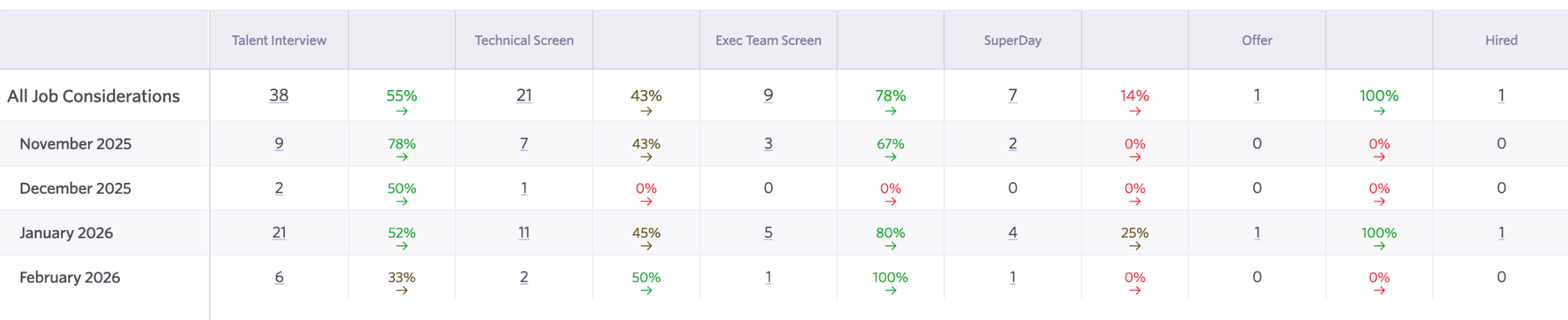
Hiring here is also time-consuming. I've spent more than 350 hours in interviews over the last 12 months, roughly 3x more than any other marketing hiring manager at PostHog.
For both these reasons I wanted to explain what makes good candidates stand out, and also because the usual signals stop working at these volumes. "Six years of B2B SaaS experience" describes several hundred people in the pile and isn't much of a differentiator. So here's what actually makes candidates stand out in a good way, and what to do about it if you're a non-traditional candidate.
If you're interested in a role, apply directly. Every job post says where we hire and what the process looks like.
What do we look for in marketing roles?
This is my favorite question to get asked. It changes by role, but a few things hold across every marketing hire...
Make the plan, then do the plan. There are no hands-off roles at PostHog and no purely strategic seats. You don't need engineering experience, but you do need to be someone who ships a fix when they hit a problem, rather than ask someone else to read your Powerpoint deck. Product marketers are the hardest role we hire for and this is why.
What good looks like:
Adlet
Strong opinions. Our brand is one of PostHog's most valuable marketing assets and the fastest way to wreck it is hiring people who tell us what we want to hear or who don't have a strong sense of taste to rely on. For us, safe takes are worse than wrong ones so we look for people with hot, spicy takes.
What good looks like: Hiring our first event marketer, we spoke to dozens of candidates whose strategy was essentially just "do hackathons".
Daniel
Exceptional at one thing, good at lots. Marketers at PostHog work across a huge breadth of things. Nurture emails, launches, merch, events, etc. so we look for people who are decent at most of it and exceptional at one thing in particular. The more unusual that thing is, and the more it shows up in the rest of the work, the better.
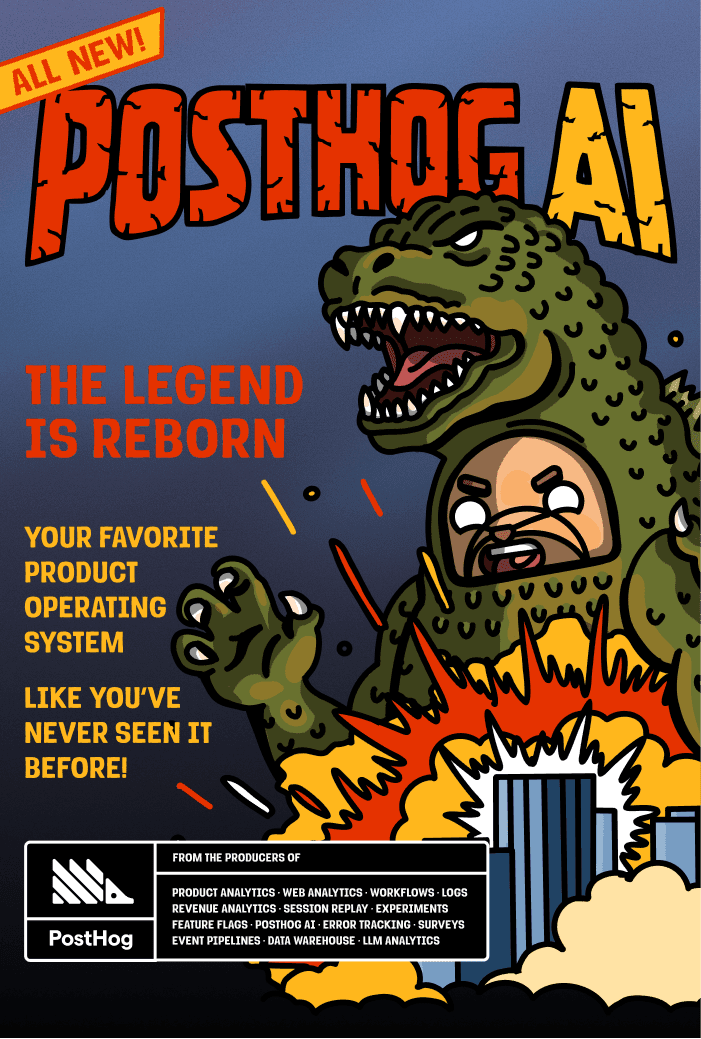
What good looks like: Artistic ability wasn't on our list of product marketer requirements. Then
Cleo
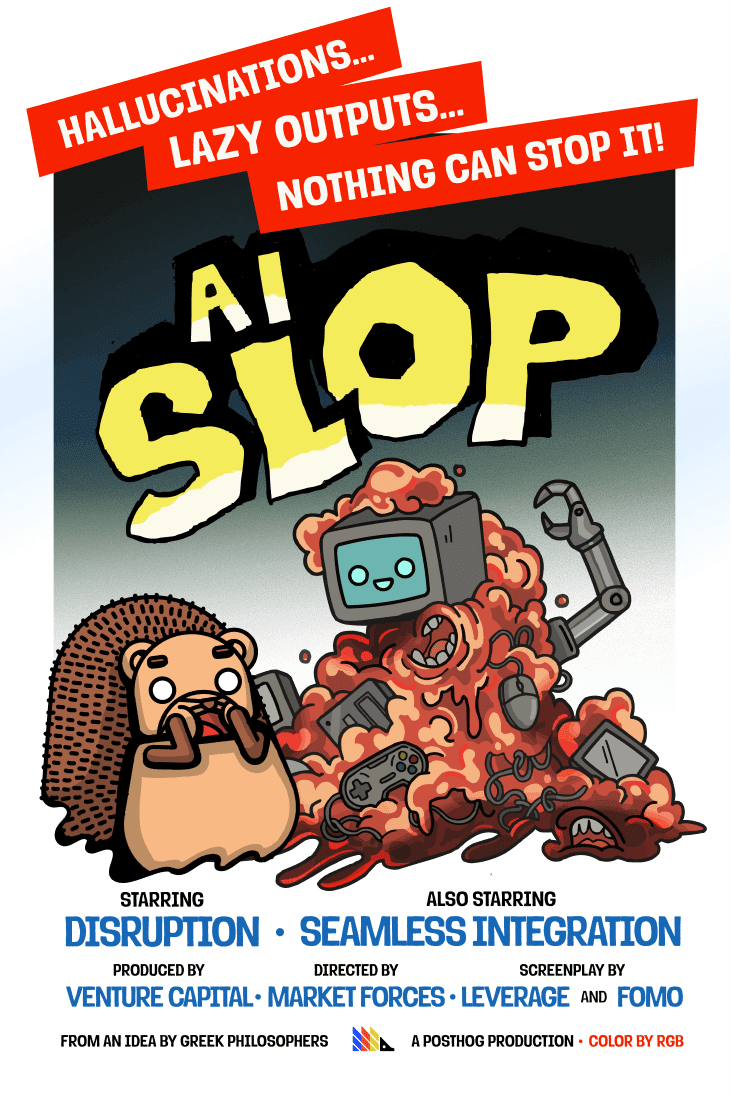
A high ceiling beats a high floor. Tech moves fast, but PostHog moves faster. It's better for us to get many things done to a 7/10 standard than one thing to a 10/10. We ship more in a quarter than most teams ship in a year and the strategy changes under us while we work. It's important to be adaptable and to understand how iteration beats polish.
What good looks like:
Lizzie
Someone who's excited about something. I ask most candidates what environment they need to do their best work, and what their favorite project has been. It tells me how they want to work and what they value, and I like watching people talk about something they're into. If they can't name anything they've enjoyed, that's the biggest red flag in the process.
What good looks like: With 8 years of marketing experience and half of it in devtools,
Sara
Low ego. Being opinionated isn't the same as being difficult. We look for people who can disagree and commit, take feedback well, ask stupid questions, and give away their legos when needed.
What good looks like: During his first week
Brian
How to make your application stand out
Let's say you tick all these boxes. How do you make sure you communicate that and get an interview?
The conventional wisdom on LinkedIn seems to be that you should message the hiring manager directly and ask for 10 minutes to "just chat about the role".
That is a bad idea and it often actively works against you. It's ok to reach out if you have a specific question about the role, but as a hiring manager, I want to follow our existing hiring process. It isn't fair to other candidates and, in my experience, it's often the lowest-effort candidates that ask for it anyway.
This is not what most people want to hear, but these are the things that actually work and help you stand out...
Get a referral. If you know someone here, ask whether they'd refer you. They get a bonus if you're hired and you turn up with someone's name behind you. It's a win-win and can lead to us fast-tracking candidates at times.
Write a cover letter. Yes, they can be tiresome to write, but real humans do read them. Our own application form says a couple of sentences will put you ahead of 90% of applicants, and it isn't exaggerating. Casual is fine. Short is fine. Telling us a story is fine. AI generating one is not.
Use PostHog, then tell us about it. We like hiring people who use the product and we like it more when they arrive with capital T thoughts. Applying for a product marketing role? Tell us what you'd change about our positioning. Applying for a lifecycle marketer role? Critique our onboarding.
Get weird with it. AI made building things cheap, so more marketers can ship as well as plan. We've had vibecoded video games about our brand, musical cover letters, and interviews where people turn up in costumes. PostHog is full of weirdos and we'd like to stay that way, so let your freak flag fly.
Further reading
PostHog is your product's context layer. With a full suite of developer tools – AI observability, product analytics, session replay, feature flags, experiments, error tracking, logs, and more – PostHog ingests and stores all the data agents need to diagnose problems, uncover opportunities, and ship fixes. A data warehouse and CDP tie it all together, unifying that context into one source agents can read across. You can steer it all from Slack, the web app, the desktop (PostHog Desktop), or your own editor via the MCP.