





Use Self-driving in PostHog Desktop
Contents
PostHog Self-driving watches your product data, investigates problems, and collects the results as reports. PostHog Desktop gives you one place to review those reports, ask follow-up questions, and start fixes.
Self-driving uses the same reports and configuration in PostHog Desktop and the PostHog web app. Changes you make in either app apply to the same project.
Open Self-driving
Select Self-driving in the navigation rail. Reports appear in one list. Filter the list by state to show what you want, such as Needs decision, Review and merge, Resolved, or Dismissed. Reports stay ordered by priority within the list.
Use For you to see reports where you are a suggested reviewer. Switch to Entire project or choose a teammate to inspect another working set.
Search reports by title. You can also filter by signal source, pull request status, and priority, or change the sort order.
Review a report
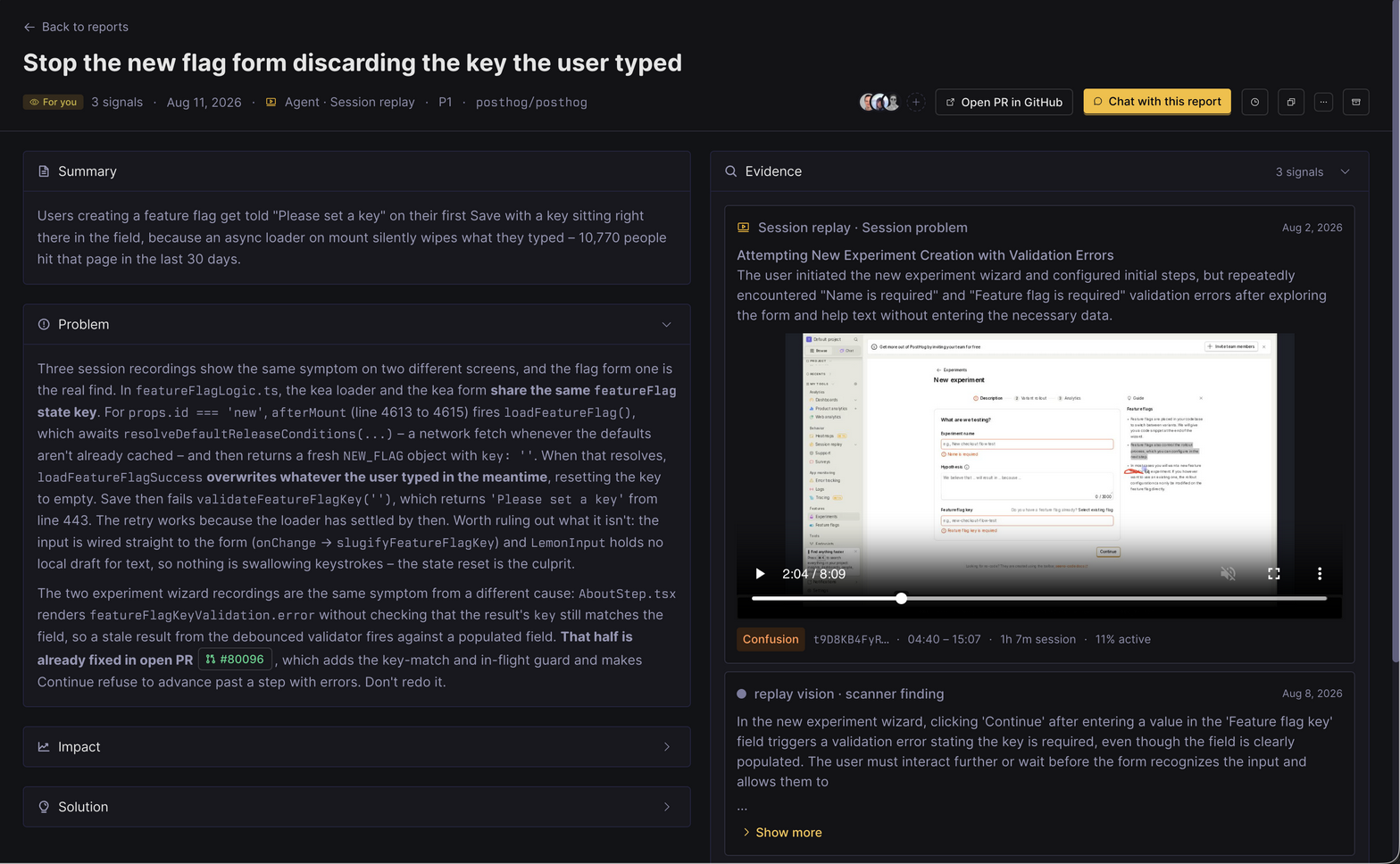
Open a report to read its summary and the evidence behind it. Depending on the report, this can include:
- The agent's verdict and recommended next step
- The findings and signal sources that contributed to the report
- Charts that show the affected behavior
- Suggested reviewers and repository context
- Research, task, and pull request activity
Report controls
Use Defer to remove the report from your current working set until more evidence arrives. Use Resolve when the work is done. A resolved report stays resolved. If the same problem returns later, Self-driving files a new report instead of reopening this one. Use Dismiss when you do not want Self-driving to continue with the report. Add a reason when you dismiss a report to help improve future reports. Dismissed reports stay available in the Dismissed view.
When a report has a pull request, select Open PR in GitHub to review it in GitHub. PostHog Desktop does not merge changes automatically.
Continue in chat
Use the report's chat to investigate the report and work with the implementation agent. The conversation includes the report and its evidence as context.
You can use a suggested action or tell the agent what you need. Depending on the report, the agent can investigate further, start or continue a fix, or visualize the report on a canvas.
You can ask what caused the problem, who is affected, or how the proposed fix works. Select text in the report and choose Ask about this to quote that passage into the conversation.
The same chat follows the report's implementation task when one exists. Use it to request a change or continue the fix. Open the full task when you need its complete timeline, files, or code review tools.
Configure Self-driving
Select Configure agents from the Self-driving page, or open Settings and select Self-driving. From there, you can:
- Choose which signal sources create reports
- Set the daily report limit
- Set the minimum priority for automatically started tasks
- Choose the base branch for automatically opened pull requests in each repository
- Configure Slack notifications for new reports and suggested reviewers
Connect your project and personal GitHub accounts before asking Self-driving to work in a repository. See PostHog Desktop settings for the related GitHub and Slack controls.