




Ruby on Rails error tracking installation

  1. Install the gems

    Required

    Add the posthog-ruby and posthog-rails gems to your Gemfile:

    Gemfile
    gem "posthog-ruby"
    gem "posthog-rails"

    Then run:

    Terminal
    bundle install
  2. Generate the initializer

    Required

    Run the install generator to create the PostHog initializer:

    Terminal
    rails generate posthog:install

    This will create config/initializers/posthog.rb with sensible defaults and documentation.

  3. Configure PostHog

    Required

    Update config/initializers/posthog.rb with your project API key and host:

    config/initializers/posthog.rb
    PostHog.init do |config|
    config.api_key = '<ph_project_api_key>'
    config.host = 'https://us.i.posthog.com'
    end
  4. Send events

    Recommended

    Once installed, you can manually send events to test your integration:

    Ruby
    PostHog.capture({
    distinct_id: 'user_123',
    event: 'button_clicked',
    properties: {
    button_name: 'signup'
    }
    })
  5. Configure error tracking

    Required

    Update config/initializers/posthog.rb to enable automatic exception capture:

    config/initializers/posthog.rb
    PostHog::Rails.configure do |config|
    config.auto_capture_exceptions = true
    config.report_rescued_exceptions = true
    config.auto_instrument_active_job = true
    config.capture_user_context = true
    config.current_user_method = :current_user
    end
  6. Automatic exception capture

    Recommended

    With auto_capture_exceptions enabled, exceptions are automatically captured from your controllers:

    app/controllers/posts_controller.rb
    class PostsController < ApplicationController
    def show
    @post = Post.find(params[:id])
    # Any exception here is automatically captured
    end
    end
  7. Background jobs

    Optional

    When auto_instrument_active_job is enabled, ActiveJob exceptions are automatically captured:

    app/jobs/email_job.rb
    class EmailJob < ApplicationJob
    def perform(user_id)
    user = User.find(user_id)
    UserMailer.welcome(user).deliver_now
    # Exceptions are automatically captured with job context
    end
    end
  8. Manually capture exceptions

    Optional

    You can also manually capture exceptions that you handle in your application:

    Ruby
    PostHog.capture_exception(
    exception,
    current_user.id,
    { custom_property: 'value' }
    )
  9. Verify error tracking

    Recommended
    Confirm events are being sent to PostHog
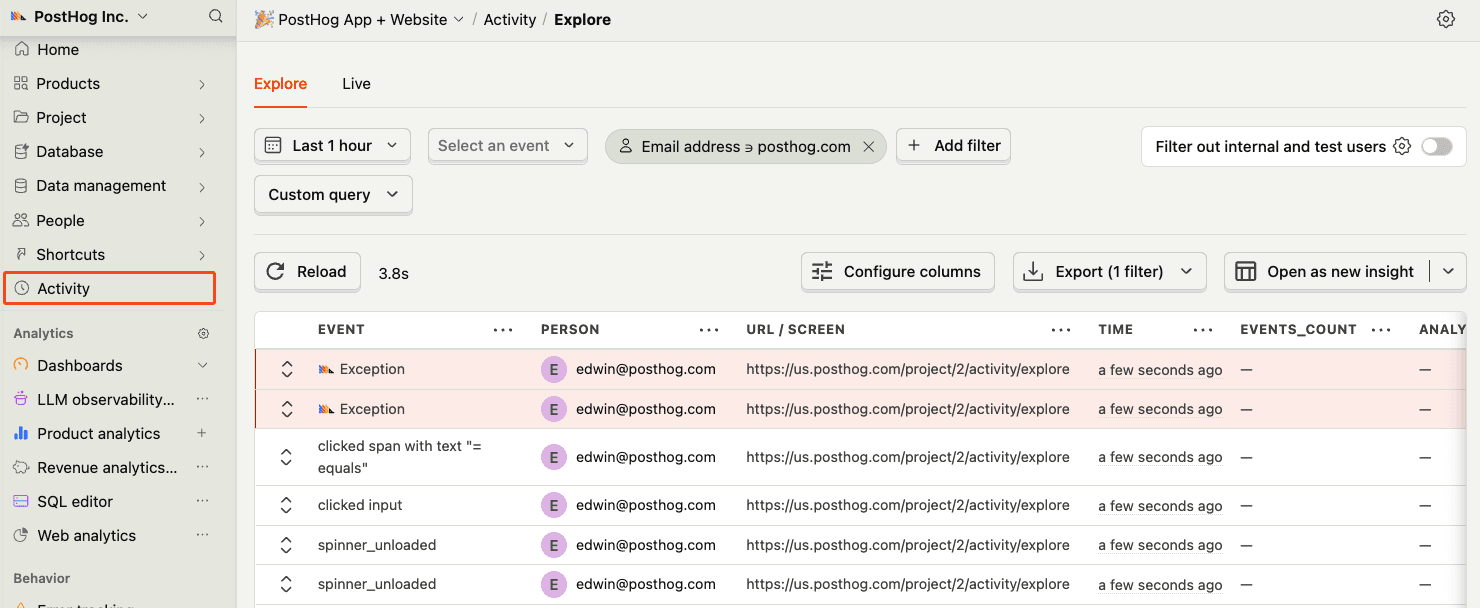
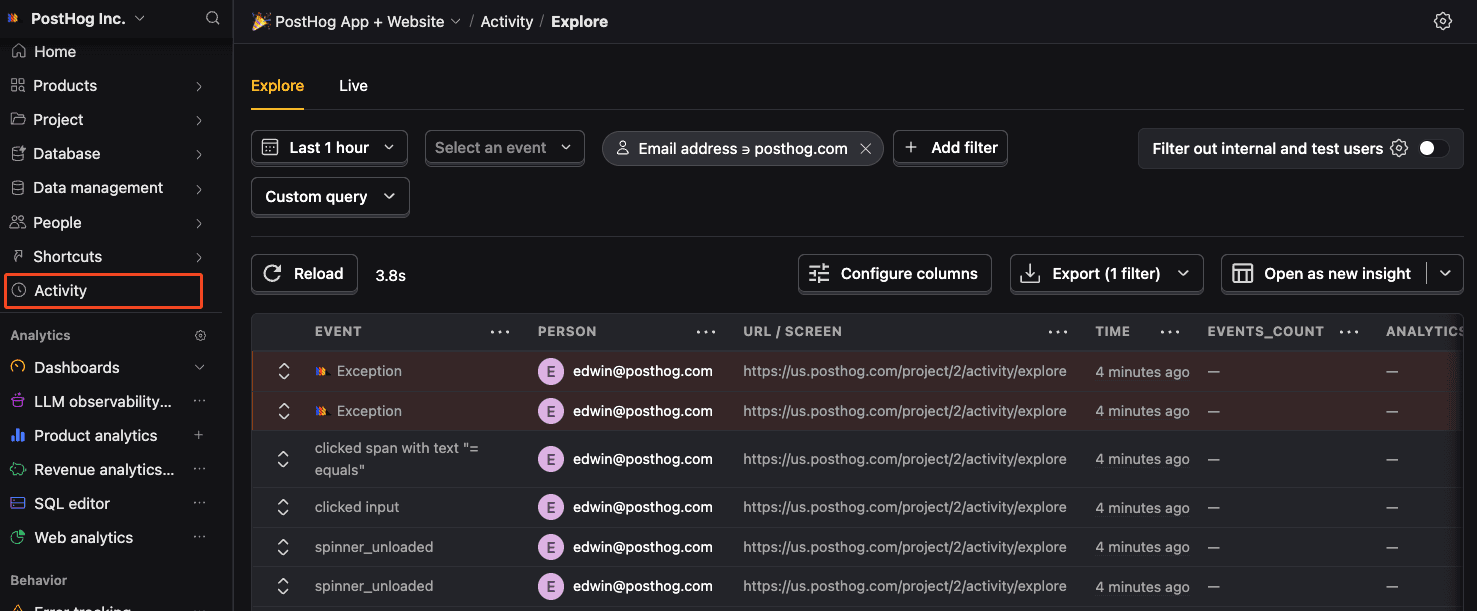
    Before proceeding, let's make sure exception events are being captured and sent to PostHog. You should see events appear in the activity feed.
    Activity feed with events
    Check for exceptions in PostHog
  10. Upload source maps

    Required

    Great, you're capturing exceptions! If you serve minified bundles, the next step is to upload source maps to generate accurate stack traces.

    Let's continue to the next section.

    Upload source maps

Community questions

Was this page useful?

Questions about this page? or post a community question.